Disrupting Corporate Impunity
The Case for Public Interest Innovation: Municipal Power

What do the Epstein file cover-ups and the normalization of PG&E’s system failures have in common? Both rely on a bedrock of impunity that allows the rich and powerful to remain above the law and beyond accountability.

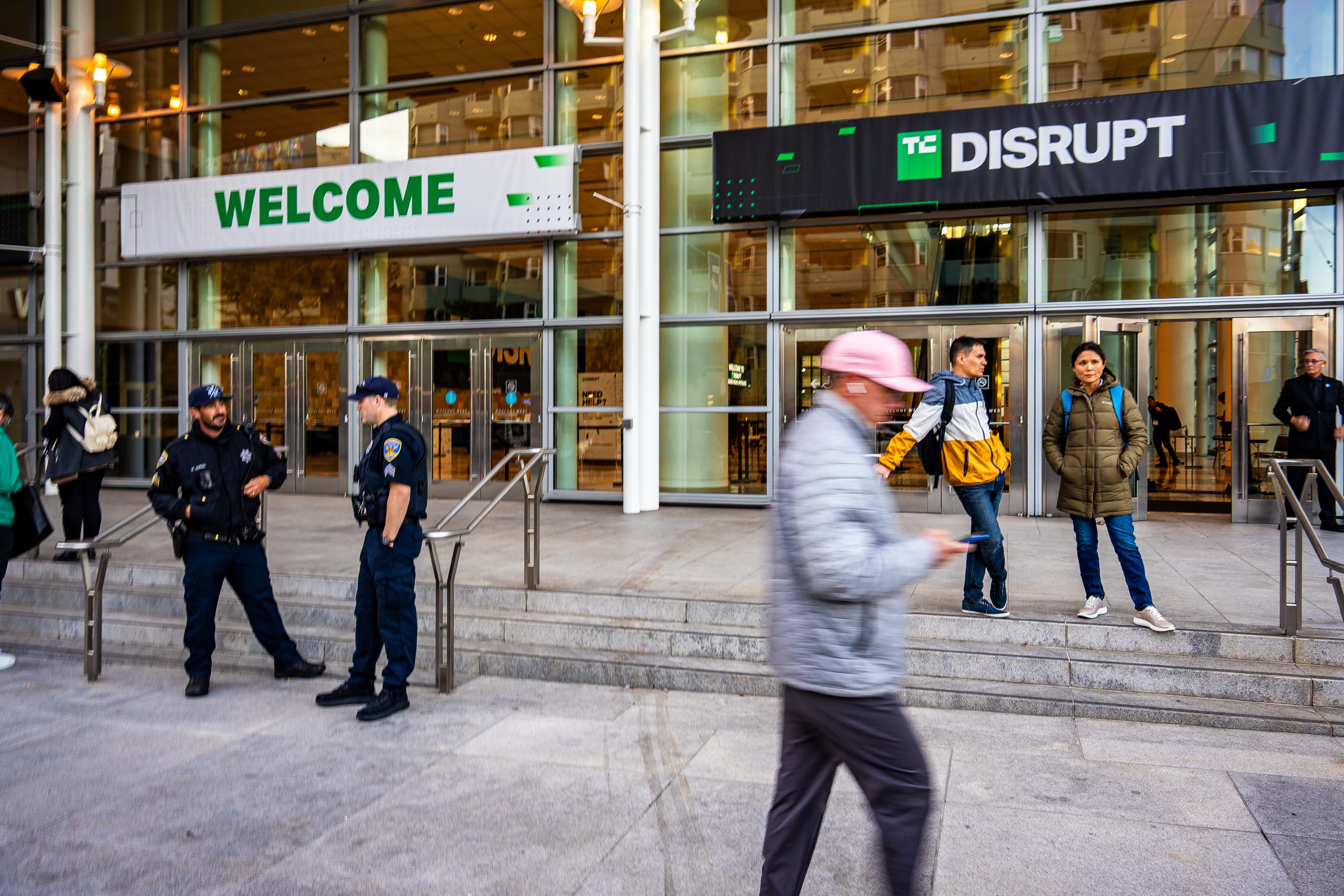
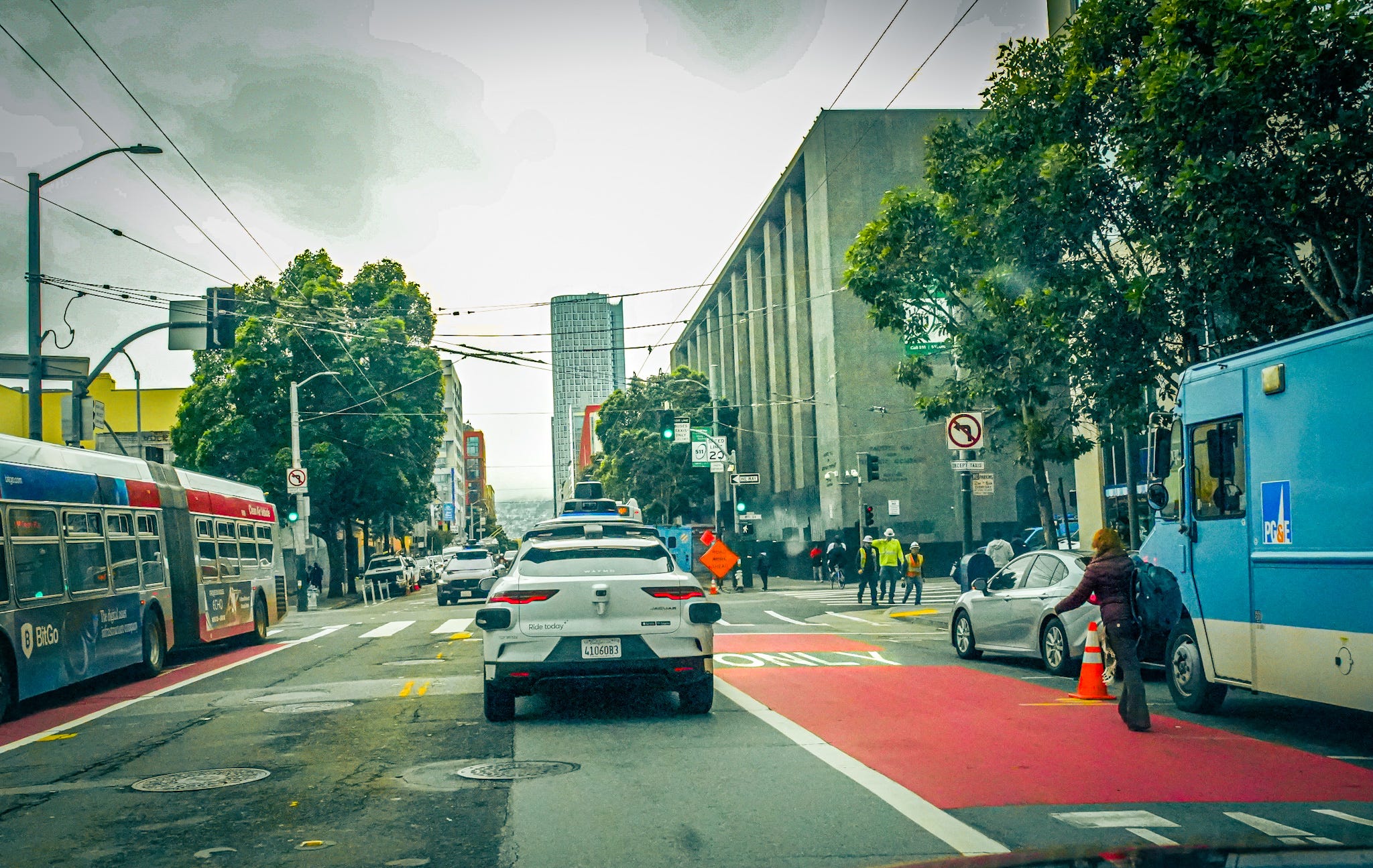
The Saturday, Dec 20th PG&E failure was not an anomaly but a part of a pattern and a warning San Francisco has ignored for far too long. The widespread power failure, triggered by a fire at PG&E’s Mission substation and cascading through large parts of the city, left tens of thousands of residents without electricity and snarled traffic. Moreover, darkened traffic signals stalled autonomous vehicles, including Waymo cars, compounding congestion. The outage also shut down transit and traffic signals, elevators, small businesses, and other basic city functions, elevating an irony not lost on the watch dogs of the tech industry that celebrates “disruption” as its governing ethos and demands deregulation and the privatization of the public commons for profit and algorithmic control.
On Saturday (and continued over the past few days), San Franciscans experienced a black out that disrupted the entire city and clogged the streets with derelict Waymo cars that had been given unparalleled access to public streets with little thought about the limits of artificial intelligence during system meltdowns.
This was not merely an inconvenience. It was a systems failure, once again the risks of entrusting an essential public utility to a private monopoly that prioritizes shareholder protection over safety, maintenance, and public accountability.
This Failure Fits a Pattern — From San Mateo County to Statewide Wildfires
For Californians, PG&E failures are not abstract. They are deadly.
San Francisco cannot discuss yesterday’s outage without acknowledging the utility’s recent history which includes the September 29, 2010 San Bruno gas pipeline explosion in San Mateo County, which killed eight people, destroyed 35 houses, and revealed systemic neglect in PG&E’s infrastructure management.
Nor can we ignore the more recent and devastating chapter: PG&E’s role in California’s wildfires. State investigations and court findings have established that PG&E equipment failures and deferred maintenance contributed directly to some of the most destructive wildfires in state history, resulting in dozens of deaths, entire towns erased, and billions of dollars in damage. PG&E’s wildfire liability was so extensive that it drove the company into bankruptcy.
Saturday’s outage belongs to that same continuum: aging infrastructure, reactive maintenance, and public safety treated as akin to an external cost rather than a core obligation.
PG&E’s Record of Substation and Grid Failures Since the 1990s
San Francisco has lived through repeated grid and substation-related breakdowns for decades — including:
1998 (regionwide outage): reporting at the time attributed the major 1998 blackout to a PG&E technician’s error at a San Mateo County substation, with widespread impacts across the region, affecting 1 million people across the region including 250,000 in San Francisco.
2003 (Mission Substation fire, major SF outage): the CPUC report documents the Dec. 20, 2003 Mission Substation fire, including the timeline and scale of service interruption with about 100,000 customers losing power when the substation was de-energized during the response.
2025 (Dec. 20, 2025 same location): multiple outlets and investigators report the outage again centered on the Mission Substation at 8th & Mission, and note the link back to the 2003 event.
In other words: this is not a one off. It is a long-running reliability and safety problem concentrated in critical urban infrastructure.
The Spin: “Close Coordination” as a Substitute for Accountability
In response to yesterday’s outage, PG&E emphasized the complexity of the damage and the scale of the repair effort. These are familiar talking points that deflect from the underlying question: why critical infrastructure continues to fail at all and gloss over any recognition of corporate responsibility.
More troubling, however, was the City’s public messaging. The Mayor described City departments as being in close contact with PG&E and emphasized coordination between the utility and local agencies.
That language matters because it positions PG&E as a functional partner rather than what it has repeatedly been in practice: an unaccountable monopoly that routinely fails to coordinate effectively with the City, especially when it comes to:
Installing and upgrading utility infrastructure for new commercial and residential developments, including affordable housing developments
Hooking up public facilities and community-serving projects like recreation centers and public pools
Aligning grid investments with climate, electrification, and resilience goals
City staff, housing developers, and community organizations know this reality well. Coordination is not proactive; it is often delayed, opaque, and driven by PG&E’s internal priorities rather than public need. When outages happen, “coordination” becomes a communications shield, not proof of preparedness.
And even in the narrow context of this weekend’s event, residents and local officials described major frustration with communication and the handling of the outage.
Why Municipal Power Can No Longer Be Optional
When the state allows monopoly corporations to deny proper maintenance and accountability, it’s up to local jurisdictions to turn to the commons and public interest innovation like municipal power.
San Francisco already generates most of the electricity it uses through public assets. What we do not control and what keeps failing is the distribution system.
PG&E, December 20, 2025 failure demonstrates that ceding vital distribution to PG&E is no longer sustainable nor an option.
Municipal power is not an ideological aspiration; it is a public safety necessity. It is about ensuring:
Reliable power for transit, traffic signals, elevators, and hospitals
Predictable infrastructure delivery for housing and public projects
Democratic accountability over rates, maintenance, and long-term planning
A grid designed for resilience, electrification, and climate adaptation, not shareholder return
Why 2026 Must Be the Turning Point
If San Francisco is serious about preventing the next outage or the next catastrophe 2026 must be the year the City commits to municipal power with a clear, time-bound plan.
Not just another study, not even another task force, but a commitment.
That means, recognizing what the City is already doing, from the Mayor’s Office to the City Departments, Authorities and Agencies, and speaking with one consistent voice for public interest innovation:
Adopting a binding roadmap to acquire or control local distribution assets.
Securing financing authority and governance structures. Financing authority is already vested in the San Francisco Public Utilities Commission which has already been exploring purchasing the PG&E grid.
Requiring enforceable coordination standards now while building parts of our own grid to begin transitioning away from PG&E.
Putting the question directly to voters with real implementation authority.
With political will, municipal power can be achieved sooner than many assume particularly if the 2026 open congressional and gubernatorial campaigns speak directly to the public’s desire to end the impunity log afforded to the rich and powerful and corporate monopolies like PG&E. Los Angeles, through its publicly owned utility, demonstrates that large, complex cities can operate municipal power at scale.
While there are few recent examples of cities newly creating utilities from scratch, San Francisco is uniquely positioned to do so in a modern form, one that integrates efficiency with equity, climate justice, climate resilience, and democratic accountability from the outset. San Francisco already has much of the generation capacity, public-power expertise, and institutional expertise needed to complete the transition.
The Choice is Clear
The December 20, 2025 outage was not an accident. It was a reminder.
We can continue to normalize failure, wrap it in coordination language, and hope the next breakdown isn’t worse — or we can take responsibility for our own infrastructure and our collective safety.
PG&E has shown us, again and again, who it is.
The question is whether San Francisco is finally ready to govern accordingly and truly break up the monopoly’s hold on our safety and security.